
Image: The Ultimate Bird Drawing Throwdown Showdown Graphic featuring images of David Sibley and H. Jon Benjamin

Join BirdNote tomorrow, November 30th!

Illustrator David Sibley and actor H. Jon Benjamin will face off in the bird illustration battle of the century during BirdNote's Year-end Celebration and Auction!
RESERVE YOUR SPOT

Shows With Contributions by Conor Gearin

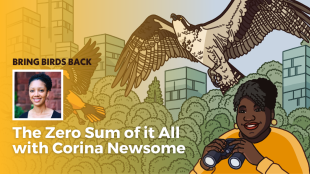
Artwork for episode 1 Bring Birds Back, featuring a photo of Corina Newsome and an illustration of Tenijah Hamilton

The Zero Sum of it All with Corina Newsome

In the season four premiere, we’re joined by wildlife advocate, ornithologist and (social media star) birder, Corina Newsome! Tenijah speaks with Corina about the latest findings in the State of the Birds report, the impact of environmental racism on urban communities and birds, and the…
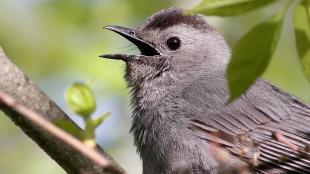
A Gray Catbird with soft light gray plumage and dark eye, its short sharp beak open as it calls

Birds that Sound Like Cats

Named after their distinctive cat-like “mew” call, Gray Catbirds are mimic thrushes, related to mockingbirds and thrashers. They can imitate a wide variety of noises, from songbirds to mammals to frogs. Noisy and boisterous in the spring, a migrating flock of catbirds can fill a city park…
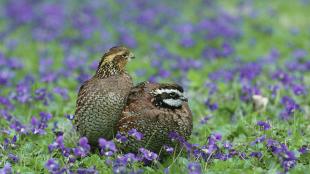
A pair of small round birds sit close to each other in a flowering landscape

Kari Sasportas on Advocating for Autistic Birders

For Kari Sasportas, who helps lead the Feminist Bird Club of Boston, birding is a way to become absorbed in the sensations of the outside world — something that can be difficult for them to do elsewhere as an autistic person with an auditory processing disorder. Kari advocates for making…
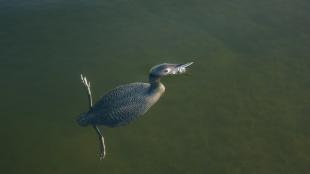
A Common Loon, with just its head breaking the surface of the water as its long legs propel its body underwater

Diving Birds Are Dense

While many birds have hollow bones that make flying a breeze, diving birds are built differently. The bones of divers such as Common Loons are denser than those of songbirds and other expert fliers. With a lightweight skeleton, they’d be too buoyant to dive and chase fish. Instead, loons…
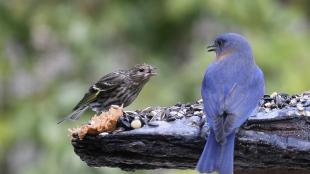
A Pine Siskin protests at an Eastern Bluebird while they are both perched at a bird feeder

Volunteer for Project FeederWatch

Project FeederWatch is a community science project studying over 100 species of birds that spend their winters in North America. From November through April, people count the birds they see at a bird feeder, whenever and wherever they’re able, and submit their bird list to the project.
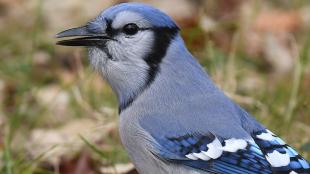
Close view of a Blue Jay looking over its shoulder on leaf-strewn grassy area

Join the Great Backyard Bird Count

Over the course of four days in February, the Great Backyard Bird Count gathers heaps of info about birds all over the world — and helps people connect with their local birds. Anyone can participate with the Merlin Bird ID app. And if you’re familiar with your neighborhood birds, you can…
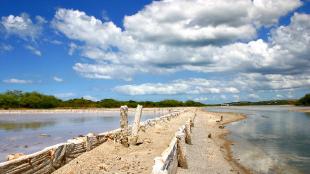
View of Cabo Rojo salt flats beneath a partly cloudy sky

Salt Flats as Bird Habitat

In the Salt Flats of Cabo Rojo, Puerto Rico, the Indigenous Taino people found a way to harvest salt long before Europeans arrived. But this unique ecosystem isn’t just useful for sea salt production — the salty lagoons are full of brine shrimp for shorebirds to eat. Local residents banded…
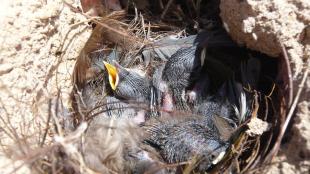
A House Wren nest with several nestlings inside it

Participate in Project NestWatch

Organized by the Cornell Lab of Ornithology, Project NestWatch is made up of volunteers around the world who monitor bird nests, reporting whether the birds successfully raise their young. Joining the project involves a bit of online training, finding a nearby bird nest, and briefly…
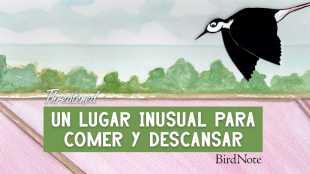
"Un Lugar Inusual Para Comer y Descansar"

Un lugar inusual para comer y descansar

En Puerto Rico hay un área de lagunas salinas, salinas y manglares donde los humanos han extraído sal por más de 500 años. Por lo general, describimos el efecto de la actividad humana sobre el medio ambiente como negativo. Pero las aves migratorias que comen y descansan en uno de los…
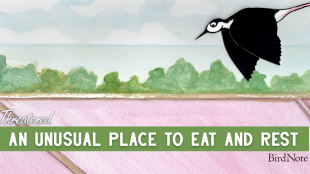
An illustration of a Black-necked stilt. It's has a white underside and a black top. The text under it reads "An Unusual Place to Eat and Rest"

An Unusual Place to Eat and Rest

In Puerto Rico, there is an area of saline lagoons, salt flats and mangrove swamps where humans have extracted salt for over 500 years. We often describe the effects of human activity on the environment as negative. But the migratory birds that eat and rest in one of the most visited…