
Image: The Ultimate Bird Drawing Throwdown Showdown Graphic featuring images of David Sibley and H. Jon Benjamin

Join BirdNote tomorrow, November 30th!

Illustrator David Sibley and actor H. Jon Benjamin will face off in the bird illustration battle of the century during BirdNote's Year-end Celebration and Auction!
RESERVE YOUR SPOT

Shows With Contributions by Bob Sundstrom

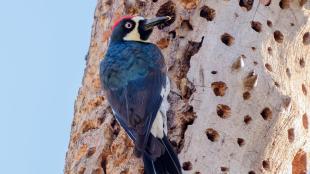
An Acorn Woodpecker showing its dark back, black and white head and red top patch as it clings to a tree trunk dotted with small holes, some filled with acorns

Acorn Woodpecker Granaries

The Acorn Woodpecker is found in parts of the western US. It chips small recesses out of trees to fit the acorns it will harvest throughout the fall. A family of Acorn Woodpeckers may use this storage tree, or granary, for generations. Some of them hold as many as 50,000 acorns. So does…
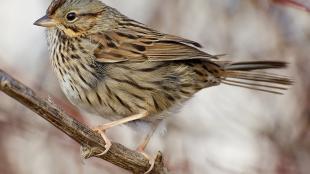
Lincoln's Sparrow

October Migrants - Look Who's Back!

In the October sunlight, a Lincoln's Sparrow – like this one – sings energetically from a hedgerow. Soon a Fox Sparrow chimes in. Both nested in Alaska last summer but will spend the winter farther south. The Snow Geese are moving, too. A massive movement of birds takes place in the fall…
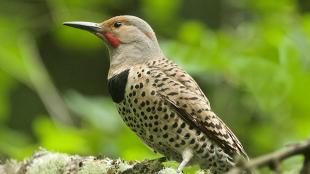
Northern Flicker

Woodpeckers as Keystone Species

Woodpeckers - including this Northern Flicker - are master carpenters of the bird world. They're called "keystone" species for their crucial role in creating habitat suited to other woodland wildlife. Abandoned woodpecker nest-holes become nests or roosts for small owls, cavity-nesting…
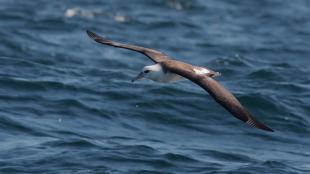
Laysan Albatross

An Albatross Surfs the Wind

By moving from the faster high air to slower low air, or vice versa, an albatross can propel itself forward. In a series of sinuous loops, the albatross surfs the wind, up and down, repeating the pattern over and over again as it moves thousands of miles across the ocean.
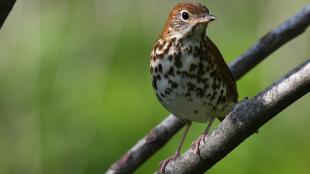
Wood Thrush faces the viewer, its head turned to its left while perched on a branch in filtered sunlight.

A Bird Migrates South, Step by Step

Wood Thrushes migrate more than 2,000 miles each way, between their summer breeding territories in the US and Canada to where they winter in Central America. During migration, the birds will fly for hundreds of miles at night, then stop for days or weeks to refuel. In the spring, they’ll…
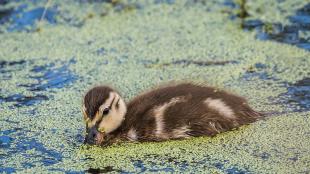
Gadwall duckling swimming and "dabbling" its beak into the water

The Fine Art of Dabbling

Picture this Gadwall duckling swimming slowly across a pond, skimming the water’s surface with its broad, spatulate bill. This behavior is called dabbling. Along with the pond water, multitudes of tiny particles pass through the duck’s bill. Somehow it sorts out and swallows the edible…
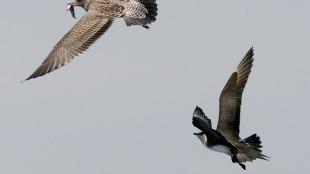
Parasitic Jaeger with Gull

Jaegers Give Chase in September

A tern or gull plunges headfirst into the water, then bounces aloft grasping a small fish in its bill. But before the bird can swallow its catch, a Parasitic Jaeger swoops in. The jaeger nips the bird's wing, and it drops its hard-won fish. The pirate catches the fish in mid-air and gulps…
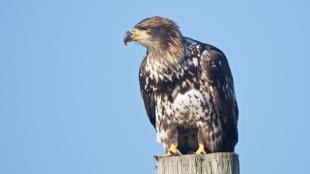
Immature Bald Eagle

Bald Eagles Fledge

When young Bald Eagles fledge, the event is the culmination of nearly a year’s work by the parents. Let’s recap how it might have gone: male and female build a nest over the winter. By March, they have two eggs. The female incubates the eggs for about a month, with the male taking an…
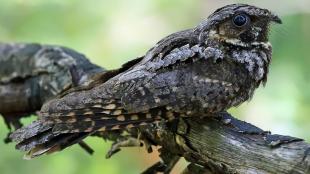
Eastern Whip-poor-will perched on branch

Night Singers

A bird like the Whip-poor-will is a true night bird – feeding, and mating, and nesting in the dark. But for about a week each spring, male Yellow-breasted Chats also sing in the darkness as they call out to the arriving females — their potential mates. There are other night singers, too!
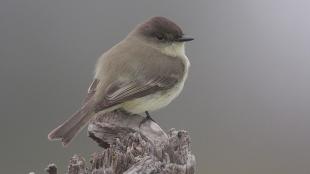
Eastern Phoebe

The Phoebe and the Pewee

The Eastern Phoebe (pictured here) is one of the most familiar flycatchers east of the Rockies. Because the Eastern Phoebe repeats its name when it sings, it’s a pretty straightforward voice to identify and remember. But there’s another flycatcher east of the Rockies that whistles its name…