
Image: The Ultimate Bird Drawing Throwdown Showdown Graphic featuring images of David Sibley and H. Jon Benjamin

Join BirdNote tomorrow, November 30th!

Illustrator David Sibley and actor H. Jon Benjamin will face off in the bird illustration battle of the century during BirdNote's Year-end Celebration and Auction!
RESERVE YOUR SPOT

Shows With Contributions by Frances Wood

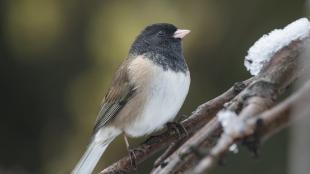
A Dark-eyed Junco sitting on a snowy branch

Return of the Snowbird

You may see Dark-eyed Juncos in the summer, but come fall, many more — those that have been nesting in the mountains or farther north — arrive to spend the winter. These juncos often visit birdfeeders for winter feasting. Dark-eyed Juncos forage on the ground. The flash of white tail…
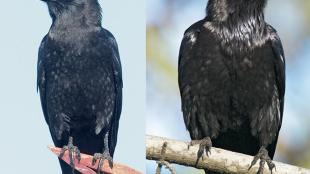
American Crow and Common Raven

Ravens and Crows - Who's Who?

Is that big black bird a crow or a raven? How can you tell? Ravens (seen right here) often travel in pairs, while crows (left) are seen in larger groups. Also, study the tail as the bird flies overhead. A crow's tail is shaped like a fan, while the raven's tail appears wedge-shaped or…
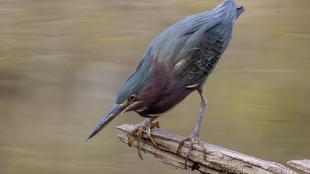
Green Heron looks intently at the surface of water as it perches on a low branch.

Green Heron

The Green Heron forages on the banks of small bodies of fresh water. Relying on its plumage for camouflage, it perches motionless — body horizontal and stretched forward — waiting for small fish to come close. This heron may use "bait" while hunting for fish. It drops a feather, a live…
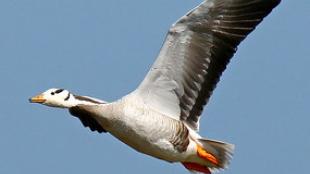
Bar-headed Goose

How High Birds Fly II

Bar-headed Geese, champions of high-altitude migration, leave their nesting grounds in Tibet and scale the Himalayan range on their way to wintering grounds in the lowlands of India. How do they do it? These geese have a breathing structure that extracts oxygen from thin air, even at 30…
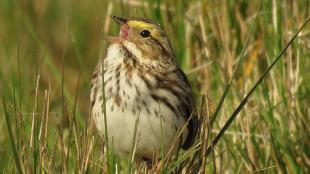
Savannah Sparrow singing

Savannah Sparrow

Savannah Sparrows are abundant in open habitats throughout North America. In spring, they migrate north from the Southern US and Mexico to open agricultural fields, meadows, coastal grasslands, salt marshes, and even tundra to breed and raise young. They nest on the ground and walk, run…
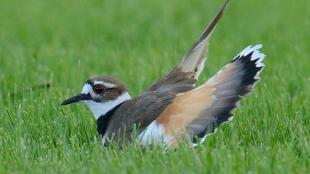
Killdeer doing a broken wing distraction

Killdeer, Master of Distraction

Since Killdeer don’t always pick the safest places to lay their eggs, they’ve developed a clever way to protect their young. They use the art of distraction. When it spots a predator close by, the Kildeer parent will pretend it has a broken wing - calling loudly and limping along as it…
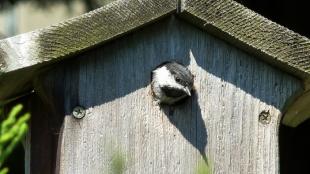
Black-capped Chickadee in a nest box

The Perfect Nestbox

Many native cavity-nesters - including this Black-capped Chickadee - will nest in an artificial birdhouse, or nestbox. Look for a nestbox that's plain wood. If the birdhouse comes with a perch, remove it. It just makes it easier for a predator bird to land and go after the eggs or young…
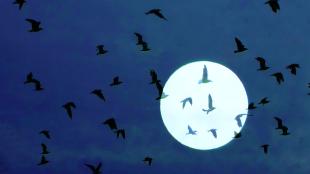
Migrating birds across full moon

Nocturnal Migration of Songbirds

If this week's bright full moon pulls you outside, pause for a moment and listen. You might hear migrating songbirds overhead. Most songbirds migrate at night, when fewer predators are out. The migrants stop, feed, and rest during the day. However, many scientists believe that the main…
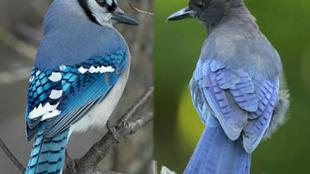
Blue Jay and Steller's Jay

Those Raucous Jays

A raucous call and a bold flash of blue at your feeder means a jay has arrived. East of the Rockies, your visitor is quite likely a Blue Jay (left). Out west, you're probably seeing a Steller's Jay. These daring blue dandies sound the alarm, announcing the approach of a predator. Often the…
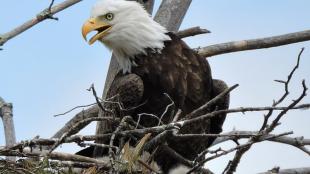
Bald Eagle sitting in its nest – the nest built of interwoven sticks

Eagles Rebuild

Bald Eagles build large stick nests in tall trees. These nests endure rough treatment. Rambunctious chicks pull sticks out and flap madly, holding on with their feet, before they fledge. Wind buffets the nest year round. But eagles reuse their nests year after year. Adult eagles break off…