
Join BirdNote tomorrow, November 30th!
Illustrator David Sibley and actor H. Jon Benjamin will face off in the bird illustration battle of the century during BirdNote's Year-end Celebration and Auction!
The Climate Crisis is at Home
Bring Birds Back Season 7: Episode 5

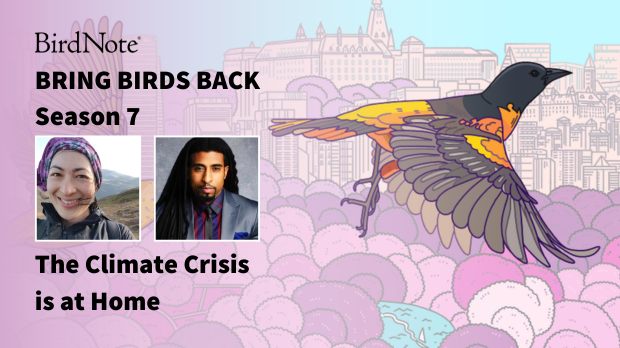
What’s a climate crisis without acknowledgement of an emergency? In conversation with guests Dr. Rose Abramoff and Dr. Mustafa Santiago Ali, host Anika Hazra discusses the ever-evolving battle for a healthy world from the front lines to legislation. Rose, a climate scientist turned activist, shares her viral story about a protest that led to her termination at work. And Mustafa, a leading activist, strategist and policymaker, brings decades of experience about fighting back behind government lines and beyond, from the EPA to the NWF. Both, from two different generations, have one uniting goal and offer critical advice and support.
Want more Bring Birds Back? Follow us on your favorite podcast app and on Instagram @BringBirdsBack!
And for more information about how to get involved in our From Love to Action campaign, visit this page.
BirdNote is a nonprofit. Your tax-deductible gift makes these shows possible.
Bring Birds Back Season 7 is sponsored by the Cornell Lab of Ornithology and Bird Academy.
Anika Hazra: BirdNote Presents.
[Bring birds Back Stinger]
This is Bring Birds Back. I’m Anika Hazra.
[intro music starts]
To say that we love birds here at BirdNote would be an understatement. But it’s not just about the joy of observing them and learning about them, birds teach us about the health of the spaces around us. Climate change, environmental racism, natural disasters, lack of clean water and fresh air and so many other issues all affect birds. They also, rather drastically, impact us humans, and we are the ones who can actually do something about it.
Advocating for a better world isn’t always the easiest – not everyone even agrees it’s important, and the laws often don’t back you up. On this episode of Bring Birds Back, we’re talking to two headlining activists from different generations who have chosen to stand up in the face of uncertainty and discomfort, in the name of environmental science.
Later, Dr. Mustafa Santiago Ali reflects on his more than two decades of experience fighting for environmental justice, both in the nonprofit world and as part of the federal government. First, though, meet Dr. Rose Abramoff an earth scientist who’s fairly new to the activism world — but whose work has undeniably made a statement.
[music ends]
Anika: Rose, welcome to the show. Thanks for joining us.
Dr. Rose Abramoff: Thanks for having me.
Anika: All right. Can we start off with you just introducing yourself and also sharing a bit about your research?
Rose: Sure. So I am an assistant professor of Forest Science at the University of Maine, although I'm speaking on my own behalf for this podcast. And what I study is forest soils and not really limited to forests but, the effects of climate change and land use change on like carbon and nutrient cycling. I tend to focus on forests and I tend to focus on the plant roots and soil and fungi and little critters that crawl around below ground.
Anika: So you describe yourself as an earth scientist and also a climate scientist. Can you explain what those fields of science focus on?
Rose: Sure. It's often tough for me when people ask me to define who I am and what I study because I feel like a lot of the work that I do is so interdisciplinary. So earth science is the study of Earth and that has a lot of different potential foci. Like it could be the study of the atmosphere or oceans, or ice flows and ice sheets, glaciers, or, terrestrial ecosystems like land ecosystems to not use jargon. And really there are so many different components of that because Earth is so rich with a variety of different ecosystems.
The other was climate scientist. Yeah. So often when people say ‘climate scientist’, they're thinking about people who study climate change and make predictions of how climate will change. I'm a little bit more like on the study of how climate change affects ecosystems. I will make predictions of how ecosystems will change and sometimes that will feed back into predictions of how the climate might change. So it all matters.
Anika: So what got you interested in this kind of interdisciplinary route to studying the earth and climate change?
Rose: Well, I started as a forest ecologist. And mostly - because I grew up in San Diego, California which is basically a desert, a botanical desert - when I got to the east coast for some of my schooling, I was just like, ‘wow, trees, trees are amazing, everything's so green’. And had this kind of desire to understand those more moist tree covered ecosystems better. And then as I got deeper into forest ecology, I started to understand the ways in which our forests are changing. And all types of land ecosystems are changing. And what humans have done to sort of bring about those changes.
Anika: Do you wanna share a little bit more about your postdoc work?
Rose: My first postdoc out of my PhD was at Lawrence Berkeley Lab in California. Where I was basically looking at the effects of warming on soils.
So what happens when you warm soil up? How much more greenhouse gases - in this case, carbon dioxide and methane - are emitted? And so, one of the studies which just came out about that is, looking at how much more greenhouse gas is emitted when you warm up frozen soils in the most northern city of Alaska, just called Utqiaġvik. There's a warming experiment there where a bunch of people, including myself, made measurements of greenhouse gas emissions from that frozen soil. It's melting rapidly.
And that study was particularly impactful to me because doing field work in these really different ecosystems, you know, growing up in a city - a kind of dry city - and living in sort of a standard temperate forest, you sort of feel like you've seen everything that nature has to offer. But the frozen north is just like a totally different way of living. You know, it's very cold all of the time. It's too cold for trees to grow. Like the earth has this kind of like undulating topography with these little hills and we call 'em hummocks and hollows.
And when it melts the Earth sort of sags in, in parts. So you can see that it's like a visual manifestation of how the climate is changing in a way wherein the cities that you or I might be in right now, like, we don't necessarily have that visual impact.
Anika: Can you tell us more about the research? How did you go about that study?
Rose: Sure. The study was designed by my supervisor, Margaret Torn where you basically put a heating rod, it's like a little heating element that you can stick vertically down into the soil that heats this area. It's not a very large area, it's basically the size of a dinner plate. And there's a, kind of, plastic circle that you hammer down into the ground, and that's the mini plot area. And so you heat that little area.
And then you can put a little chamber on top, which collects the accumulating gases, carbon dioxide and methane, and measures their concentration using a machine that uses infrared light. And uses the basic concept that carbon dioxide absorbs energy of a certain spectra. And we can sort of measure that and how the concentration of those greenhouse gases are increasing. I helped with each of those field seasons on the, like, data collection of gases.
[inquisitive music begins]
And then as we were writing the paper, also doing some estimations of how much more greenhouse gases would be emitted based on the temperature sensitivity that we currently assume from those ecosystems. 'Cause one of the things that we found was that the temperature sensitivity of these soils was higher than what has been kind of a previous assumption, um, for how sensitive these soils are to temperature, how much more greenhouse gases they emit when they're warmed up.
Anika: And what was your biggest takeaway from that study?
Rose: My biggest takeaway is that these are ecosystems that are changing in a very dramatic way, in ways that we have not seen in all of human history. And we're not gonna be able to return. Like, it takes much longer to freeze soil than to unfreeze soil at the rate that we're unfreezing it.
And that we're potentially underestimating in our large Earth system models the amount of carbon that's being released. But the sort of visceral takeaway is that these are ecosystems that are irreversibly changing. Um. And we've done that.
Anika: Wow. Yeah. So pivoting to your work in activism, would you say there was a specific experience or maybe a specific moment, as a researcher, where you felt empowered to start working in activism?
Rose: Hmm. Probably a time when I felt the most empowered to turn to activism was when I got my job at the Oak Ridge National Laboratory. So I was doing a postdoc in France and then I got this staff position at a national laboratory, which meant that I could return to the US. And when you live in a foreign country and you don't have the rights of citizenship, it can be a little bit more dangerous to engage in protest, as we're all understanding more deeply now.
So then when I moved back to the US, I felt like I regained the sort of protections of citizenship, theoretically, and that it would be safer for me to engage in direct action. That I sort of understood what the risks are and could better define them than when I was living in France. Oak Ridge National Laboratory, or the ORNL, is a government agency housed inside of the U.S. Department of Energy and is funded by tax-payer dollars. The lab is located in Tennessee, and the work there is focused on multidisciplinary science and technology development in fields from clean energy to national security. The lab is known for its founding role in the development of nuclear energy, and building the world’s most powerful supercomputers.
Anika: You actually made the news while you were working at Oak Ridge National Laboratory, and you lost your job as a consequence of protesting fossil fuels at the American Geophysical Union Conference in 2022. Can you just explain what the A GU is and what their significance is.
Rose: Yeah, they are the largest organization of earth space and climate scientists in the world. The American Geophysical Union is actually larger than the European Geophysical Union. Sometimes these meetings have like 30,000 people attending. It's really pretty massive. And it's also the, sort of, largest professional organization for people who study climate change. Researchers, we do a lot of research, sort of like alone in our labs and in our offices, but in order to really push science forward, we do need to sort of become a community and share our work with each other. And I think having these meetings is also super useful because you can present work that you know isn't quite ready yet and get feedback from people about work that's in progress. You can learn about, like, really cutting edge new things that are popping up, new potential areas of research. So it's just a really rich exchange of new information about earth and space science.
Anika: So can you talk us through that experience? What happened at the AGU protest?
Rose: Sure. So this was a protest that I did with Peter Kalmus, who is a climate scientist at NASA. And we basically went up on stage of Plenary, which is one of these events that usually gathers many hundreds of people, and unfurled a banner that said “out of the lab and into the streets”. And we had this very short, sort of, plea to our fellow researchers to become more active. There's a video somewhere.
Anika: In the video, Rose and Peter begin an impassioned (but difficult to hear) speech, though undeniably a call to action. They’re quickly intercepted by AGU event planners who yank the banner from their hands, just as their peers in the crowd briefly begin to clap and cheer.
That protest in December 2022 lasted all of 32 seconds but took the media by storm. Rose and her colleague landed on primetime news and at the center of timely conversations about the state of Earth’s health and the pitfalls of sounding the alarm about it. From Democracy Now to CNN, the protest was both crucial for the science community at large and consequential for Rose’s personal career.
Rose: We got kicked out of the conference. And then, Oak Ridge, they took a few weeks to, like, deliberate on what they were going to do. But then when I came back in early January from winter break, they let me go citing that incident.
Anika: Rose and Peter also suffered consequences from the AGU. Aside from being immediately expelled from the event, they also had their abstracts removed, an action that could potentially tarnish their reputations and work.
[to Rose] You published an op-ed in the New York Times in January 2023, which seemed to have landed at a crucial time. Can you talk about that piece?
Rose: Sure. So, I had just been fired. Some colleagues of mine were starting up, like, two petitions that were basically admonishing the American Geophysical Union at this point, and not necessarily Oak Ridge. It was a little hard to tell, like, where to direct these sorts of things. But there were a couple of petitions going around, basically saying, like, ‘we support Rose and Peter’, which got a lot more, like, signatures and support than I expected, which was cool. And so I was a little bit surprised by the outrage from the scientific community that I'd been fired for this very small thing.
And so it seemed potentially useful, like, getting fired sucks. But if I'm going to lose my job, I might as well try and mobilize people with that because it is one of the central tenets of nonviolence that often when you meet resistance, like, that's something that can mobilize bystanders, right?
To see sort of, like, how poorly you're being treated by these large institutions. And so that was one of the motivating reasons and sort of let people know that people who study climate change, and scientists of every creed, are, like, trying to warn people as much as possible. Like when we cross over the line, we can certainly be punished. Because every so often I see these articles that sort of make me a little bit mad where it's like, oh, you know, we've surpassed some major global warming milestone. Why didn't anyone tell us about this? And it's like, we have been telling you! We may need to take greater risks in order to do more, but it's not a risk-free enterprise to speak out.
[music selection]
Anika: Part of Rose’s op-ed read, “I am the first earth scientist I know of to be fired for climate activism. I fear I will not be the last.
“Oak Ridge said it was forced to fire me because I misused government resources by engaging in a personal activity on a work trip and because I did not adhere to its code of business ethics and conduct.” She later writes, “The retaliation I faced from the A.G.U. and Oak Ridge ultimately highlights a disappointing reality: that established scientific institutions will not even support scientists interrupting a meeting for the climate. I’m all for decorum, but not when it will cost us the Earth.”
[to Rose] So how has your relationship evolved with the AGU since then?
Rose: It’s really improved a lot. I mean, it was certainly a process. So after we had gotten kicked out, um, the AGU initiated this kind of, like, ethics process where, um, Peter Kalmus and I met with an ethics board. We sort of explained our reasoning. They asked us questions; they explained their reasoning. And then they deliberated and basically decided to reinstate our abstracts, not to punish us any further and let us return to future meetings. And even expressed an interest in collaborating on bringing more advocacy to the meeting. And so for each of the meetings since then, we've brought an increasing amount of programming related to activism and advocacy.
Anika: As also mentioned in Rose’s op-ed, the AGU protest was not her first. Months earlier, she began protesting with a group called Scientist Rebellion. She and other members of the group chained themselves to a gate at the White House in an effort to push for a national declaration of climate emergency, and again to a fence at the Charlotte airport in North Carolina to bring awareness to the environmental harms of private jets.
[to Rose] Can you tell us about Scientist Rebellion and share some of the work you've done with this group?
Rose: Sure. Um, Scientist Rebellion is a nonviolent, civil disobedience group of scientists who are concerned about the climate crisis and are organizing campaigns all over the world to try and push various, you know, governments, companies, educate the general public. And because it's organized in a way where any group can take up the mantle if you, like, agree to the general principles, um, it's very distributed. We have little pods of groups all over the world, like on all the populated continents and so there's quite a lot of activity, in general.
Anika: So what are some current concerns you have regarding the state of science?
Rose: Oof, where to start? One concern, for example, is data loss. The wealth of data about climate, about the environment, about biodiversity that's just not a priority for this administration. Because people often think like, oh, once data's created and it exists, it just exists, it's out there. But these types of databases have to be maintained and they require personnel and resources devoted to that. That sort of thing is being cut pretty significantly. So I feel like we're gonna lose literal information that we've collected over decades.
The reduction in capacity, so just like cuts to funding, cuts to personnel means that we're not gonna be able to move research forward as quickly as we had been able to in the past. And that's gonna harm us in a lot of different ways because, you know, the United States' main export, in my opinion, is knowledge. And so I think we're really harming, not only this amorphous idea of like science, but like our literal economy.
And then I'm also kind of existentially concerned about this idea of truth, like the mutability of truth. Because the more we sort of devalue science and education and the scientific method and sort of like believing things which we can observe and can be verified by multiple people and like expertise that people develop over time, we sort of degrade our understanding of what is real and what is fiction. The bright side is that I've never seen more solidarity, within academia. Like I think everybody is really committed to getting through this as best we can, doing our best, like being scrappy, sharing instruments, sharing personnel, working on projects more collaboratively, and like getting important stuff done as much as possible.
Anika: Climate grief is a term that's gaining recognition and momentum currently, especially among the youth. So can you explain what climate grief is?
[music selection]
Rose: We usually talk about climate grief to describe not only grief, but also sometimes related feelings of like, sadness, despair, just those types of negative emotions that come from understanding what climate change has done to our natural environment, what it means for the future of humans, what it means for current human suffering in a lot of places, right?
Like the climate crisis is already impacting the health and livelihood of many people. And so it's that sort of empathetic grief, particularly young people. It's often in a similar sentence to climate anxiety, which is that sort of like dread of the future, or worry, you know? There are some groups out there, like there's a great, group called the Climate Psychology Alliance that are basically licensed therapists that volunteer some of their time to provide resources or engage in one-on-one therapy sessions to basically help people come to terms with those emotions, process them, so that they can be productive and not, sort of, experience that as a block to action or as a block to doing what they want to do in their lives.
Anika: What do you think we, as members of the community, can do to help address climate grief?
Rose: It helps to talk about it. One of the common things that we do very frequently is we'll have a climate grief circle, which is essentially like either an in-person circle or a Zoom that's kind of like a group therapy session where each person sort of shares something about their grief and it can just be kind of like personal extemporaneous narrative. It can be a poem. It can be, like, something that they thought about recently.
We have guidelines similar to group therapy. Like, don't interrupt someone, like, don't necessarily give anyone else advice or respond, like just listen. And we usually get really positive feedback. So that's a practice that we actually do in a couple of different communities with a lot of success.
Anika: Do you have any other specific tips or tricks for people who want to get into climate activism?
Rose: I think my one overarching guideline is don't act alone, act with others. because then you gain the experience of other people and you have support. Get together with friends, join a group, like don't do anything by yourself. That's when things get dangerous, and riskier.
Anika: Would you say, your protest at the 2022 conference, was it worth the consequences you faced afterwards?
Rose: I don't regret my actions. It did seem to bring a lot of researchers who had not really thought about being more present in the advocacy space, or at least started them thinking about what else they could do in their lives to respond to this crisis. And so that felt valuable to me and I'm also doing fine, like I am employed.
It's always hard because that's the type of risk analysis you have to do every time you, especially nowadays, like, think about going to a protest or engaging in some kind of action. Thinking back, I think I understood what the risks were and I was willing to take them on. And I hope that I'll continue to be able to shoulder whatever risks I encounter in the future.
Anika: All right, Rose, thank you so much for your time. I appreciate you sharing your personal experiences and stories.
Rose: Yeah. Thanks for having me on.
[music fades...]
Anika: Next up, I speak with Dr. Mustafa Santiago Ali. We talk in detail about his three-decades-long career in activism…inside the government AND on the frontlines. Mustafa is a renowned environmental justice leader, public health advocate, policy strategist, activist and poet.
Dr. Mustafa Santiago Ali: Um, so, I put this piece together for you all called
The Birds Been Prayin’ For Us.
They rise
before we do—
not just early,
but holy
wings draped in dawnlight,
they pull songs from the silence
like prophets
pulling dreams from dust
a cardinal ain’t just red
for beauty—
she bleeds purpose
into every sky she touches
they tend the garden
we forgot—
scattering seeds
we too busy to see,
pollinating prayers
we too proud to speak
their flight is scripture
if we’d just read the air—
a lesson in letting go,
in rising anyway,
in trusting the wind
to catch what’s real
& when they sing?
baby, that ain’t just music—
it’s medicine,
a sound bath
for the soul,
reminding us:
even broken things
can build nests
& birth miracles.
[by Mustafa Santiago Ali]
In honor of some of the work that you all do, you know, there's this strong connection with wildlife, and I was thinking about birds, in particular, and how they're nature's messengers. You know, they're, they're gardeners and, uh, they do all these amazing things and they also mirror the health of the planet. It's the interconnection of everything, right?
Wildlife is connected with people and people with our environment. And if we remember that interconnectedness, we'll do things differently because we see value in all spaces, in all entities, and I still believe that we will get there one day.
So I thought I'd share that with you all.
Anika: More with Mustafa… after these messages.
MIDROLL
Anika: This is Bring Birds Back. I’m Anika Hazra. We just wrapped our conversation with Dr. Rose Abramoff, earth scientist and climate activist. Rose has had significant experiences and impact as an activist over a short span of time. But how does one sustain such activism without burnout or depletion? Well, that’s where our next guest comes in: Dr. Mustafa Santiago Ali.
Today, Mustafa serves as the Executive Vice President of the National Advocacy Center for the National Wildlife Federation, or the NWF. Prior to that, he spent nearly 25 years working his way up the ranks at the Environmental Protection Agency, the EPA, before making a public and viral departure from the government agency. Mustafa shares his journey through work and advocacy with us, as well as some tips on how to best sustain one’s self through it all.
[to Mustafa] Uh, Mustafa, thank you so much for joining us. Can you go ahead and get us started by first introducing yourself and telling us a little bit about the work you do?
Dr. Mustafa Santiago Ali: Um, I'm Mustafa Santiago Ali. I've been working in nature and on environmental issues and climate issues also now, I guess for, for decades. Um, it comes out of a sense of activism that my family instilled in me around lots of different issues; civil rights issues, workers' rights issues, honoring Mother Earth. They never said exactly how you had to do that but it is a responsibility. So I'm just thankful that I've been able to work in over a thousand communities now, the highest levels in government and in nonprofits. Um, but most importantly, to be able to actually be on the ground with the frontline.
Anika: As a child, you had your first working role with the Environmental Protection Agency. How did it feel to take on that kind of responsibility at such a young age, and what compelled you to start working with the Environmental Protection Agency when you were 16?
Mustafa: So coming from the places that I come from, both in Appalachia and in Michigan, you're often far away from the government, right? And having a better understanding of how do we really begin to protect life in a more holistic way. And, you know, the Environmental Protection Agency at that time had a few different programs for students to get engaged. Shout out to Dr. Clarice Gaylord, she and Dr. Warren Banks were the ones who sat down with me and had a conversation about a newer issue at that time called environmental equity, and what they hoped to be able to accomplish along with the recommendations that had come from communities. And for me, it just, you know, there was a light bulb that went off.
I was like, well, this is something that I could really pour myself into. And the beauty of youth is that you think that issues will get solved very quickly. And I thought when I first started doing this work, you know, we'll have all this taken care of in five years. And, uh, you know, a number of decades later, uh, we are still working diligently to protect both people and wildlife.
Anika: Why did you think when you first started working at the EPA, that working within a government agency was the best place and the best way to enact change?
Mustafa:Yeah. Well that's an excellent question 'cause if we gonna have some real talk, I was just like, ‘oooh, I don't know’. I was like, this is a great opportunity to learn something new. But I had also seen, uh, some of the challenges that come from government actions. Um, and I knew how incredibly important it was to make sure that finally the voices of communities could play a role in helping to frame out the directions, right? To address both the shortfalls that were happening but also helping folks to understand that communities not only have a voice, but they have expertise, um, and that they have solutions. So all of that was incredibly important in me making that decision. I knew it was going to be a rewarding experience, but I had no idea how rewarding it would end up being overtime.
[music selection]
Anika: The same could be said for the creation of the EPA, which the agency credits to a longtime birder and writer. Silent Spring, written by Rachel Carson, was first published in 1962 as a series in The New Yorker and later as a book. It’s recognized as one of the first written pieces to garner wide public attention and controversy for its evidence-based takedown of pesticides. Carson wrote it as a cautionary tale, fearful of what the world would not only sound like, but be like if all birds died due to pesticide poison.
Rachel, who passed suddenly only two years following her revolutionary publication, ignited an interest that continued to set aflame for decades to come among the general public regarding their overall health. And in the years to follow, words like “conservation” and “environmentalism” gained momentum nationwide, eventually leading to President Nixon signing the National Environmental Policy Act in 1970, establishing the EPA.
By the time Mustafa joined the EPA, they were ready for yet another revolution– one that would consider race, class and economics to combat environmental injustices. He became a founding member of that new office in 1992.
Mustafa: The Office of Environmental Equity, which became the Office of Environmental Justice, came out of a set of recommendations from, uh, leaders from across the country who said, ‘we need to have a central place in the federal government where we can come and share, and learn, and hopefully influence as well’. They were able to share things that people didn't even believe because they said this couldn't possibly be happening in the United States of America. But we know when it comes to Black and brown and Indigenous and lower wealth white communities, that they are often carrying a significant burden from pollution.
Anika: And for my own clarification, could you explain the difference between equity and justice and what was behind the name change for that office?
Mustafa: Yeah, well, you know, Dr. Beverly Wright down at the Deep South Center once said in a meeting, you know, the difference between equity and justice is equity– we wanna make sure that we are beginning to eliminate pollution and not just make sure that everybody is carrying some of that pollution around inside of their community. Justice is about being able to understand the disproportionate impacts that have happened, um, and making sure that we are taking proactive steps and actions to address that. And making sure that we are understanding that there are certain communities that are carrying more of a burden than others.
And, um, the office was the first time a place would help people to understand the complicated issues that are often a part of a bureaucracy, right? Um, the complicated scientific information, uh, or the legislation and policies that are out there. How do you navigate the resources, right? So that office, you know, was the first time I'd ever seen in a federal space where you had individuals who had a good understanding of where folks were coming from what some of the needs are, but also honored those voices and didn't try and, and supersede what people had already began to think about and the direction that they wanted to go. It was a place where authenticity lived and was watered to grow.
Anika: In the span of his 24 years ranking upward at the EPA, Mustafa eventually served as Director of Communications, Senior Advisor for Environmental Justice and Community Revitalization and Assistant Associate Administrator for the Office of Environmental Justice – the same place he began as an intern. As a respected colleague who served through several administrations and turns of leadership, his departure in 2017 did not go unnoticed.
Mustafa: The journey at EPA is really an interesting one. Over time we were able to work in a very proactive way, with various leaders, uh, across the country, bringing them in, having them to share and speak, creating all these important vehicles like the National Environmental Justice Advisory Council or the Small Grants program, or the community and university partnership grants program; all these different programs for communities to move from what I often call from surviving to thriving.
And when I first started, one of the things people used to say all the time is, well, the science is not there. But over time, now there are thousands and thousands of studies that are out there that, that highlight all the various impacts and steps to be able to move forward. And by the time we got to when I resigned, we had a body of knowledge. We had lots of examples of success. We also knew based upon GIS tools and other things that we built over the years, where the hotspots are, where are the areas that people are still being impacted.
[music selection]
And the reason that I decided to resign was really simple. I had made a commitment to those communities that I would do what I could to always stand up and do the right thing, and when that administration came in, I believe in Maya Angelou's quote when she says that when someone shows you who they are, believe them.
When they said that they were going to do X, Y, and Z, that I knew was going to be very devastating for communities who had just been holding on by a thread, um, that I couldn't be a part of that. And I had worked under both Republican and Democratic administrations over the years. But this was just different. And I knew, uh, that they were going to shorten, uh, people's lives, that they were gonna have an impact of course now in the work that I do on wildlife, um, and that I couldn't be a part of it.
Anika: After President Trump was newly elected to his first term, attorney, lobbyist and climate change-denier Scott Pruitt was nominated and confirmed as the EPA’s newest administrator. In addition to a proposed 30% funding cut and nearly 20% employee layoff, they also planned to eliminate the Office of Environmental Justice.
Mustafa: So respectfully, I wrote my resignation letter that they say over a million people read. And tried to also share with them as I was walking out the door, all of the amazing people they had, all of the amazing resources that they had - even though we needed to have more - and examples of what success looks like so that they could never say, ‘I didn't know’. So, I said I'll take my skills elsewhere.
Anika: Mustafa’s three-page resignation reads in part, “We often forget that the choices we make on regulations affecting clean air, clean water and enforcement are interconnected with the lives of our vulnerable communities and tribal populations… Those choices will be magnified ten-fold in our most vulnerable communities and will highlight the value we place on the lives in those communities who are too often overlooked and forgotten.”
[to Mustafa] Did you have to wrestle with that decision at all? It sounds like it was actually relatively easy for you, like you were wiping your hands clean of the whole agency as you left.
Mustafa: No, it was very difficult. I prayed and I prayed some more and asked for guidance. I talked with my parents, I talked with mentors. I talked with communities; the various leaders around the country. 'Cause when you work in the government, you know, you have a responsibility to make sure that you are living up to the priorities of an administration. And that was all part of my decision.
Anika: You have seen how institutions like the EPA have been facing challenges and been dismantling in the past for, for years now. Um, and it's happening under the current administration, you might say, at a different pace, maybe even faster, or, you know, different types of challenges this time around. So what would you say is different about your concerns now about the EPA versus back then?
Mustafa: It's very strategic what's going on now. So, just for context, I used to lead the inter-agency working group, so I had 17 federal agencies and a few White House offices that were part of that. So, I was intimately connected with a number of different agencies and departments and they know how they work, have a good idea of, many of the positive things they've been able to do, and also have an idea of where some gaps were.
So to watch this dismantling, it's really disrespectful to the American people right?
You're cutting the social safety net, which people have poured resources and time and all these important elements into, whether we're talking about housing, transportation, all the things that are happening around the healthcare side of the equation, the things that are happening around equity and jobs. All these different agencies, and departments that play a critical role in people's lives. They have no idea.
I also worked a whole bunch of both, the manmade and natural disasters. And I would see, whether they're trapped in flood waters or the after effects of what goes on in Flint, Michigan, or the BP oil spill. From hurricanes, the wildfires, so forth and so on. All of these have a connection to these agencies, right? So, when we now see in this moment, science not being honored, and valued, it is about, trying to strip power away and redirect resources. And most people thought, well, it could never, possibly in America, play out like that. And we're seeing before our eyes that yes, it can, especially if men and women and others of good conscience don't stand up, make their voices heard, and push back in a nonviolent way. And be very mindful of how you utilize the civic process.
So, it's tough for me knowing that the needs of the American people will not be met. And that, for some of the agencies and departments, people's lives will be shortened and people will die prematurely, because of these sets of actions.
And I'm not sure when you take an oath, which all of us take this oath to protect the country from foreign and domestic [threats], I don't know how you live up to your oath of the responsibility that you have when you're doing these types of actions.
Anika: The latest actions to come out of the current Trump administration regarding the EPA are not only ringing alarms but are fast-moving in their scope. From the plan to eliminate the Office of Research and Development (ORD) which monitors and studies environmental hazards, to further staff reduction and reversals of long-standing environmental regulations. Deregulations and weakening on vehicle and greenhouse gas emissions, power plant pollution, weather-related monitoring and climate change studies stand to negatively impact the way in which we not only stay informed, but remain safe and healthy.
[to Mustafa]: Do you have any advice for someone who might be in the position you were back then, say they have a career right now they felt like they were going to make a difference, but circumstances have changed and now they're not so sure, or they're afraid to leave because of the practical circumstances. So for people who have a choice right now and are stuck, in terms of making a decision, what would you say to them?
Mustafa: Yeah. Well, Anika, thank you for also bringing into that question, ‘who have a choice,’ because we know in this particular moment, lots of folks are being fired who don't have a choice; who love what they do, who are committed to the American people, and trying to do everything they can to keep them healthy and safe.
You know, the formula is pretty simple. What is your morals and values and also the reality, uh, of what you have to deal with in relationship to taking care of your family, and, and other things that are a part of that. So I would say for folks, it is not an easy decision. I mean, maybe for some people it is but I think for the majority of people, it is something that they have to give great thought to. I would also tell the folks. that you have amazing skills and that it may take a while, but you will find a place whether you decide to stay where you are, because things change, right? But if you find that this is not a healthy place for you, a place that honors everything that you bring, there will be a place for that. and there's so much important work that's out there. I'm a man of faith. So I believe that if we do we're supposed to do, everything will be okay.
Anika: That healthy place mentioned. That was the Hip-Hop Caucus?
Mustafa: Yes, it was. Yes. Yes. If you've ever been underwater, and you come up and you take that first breath, uh, that was the hip hop caucus.
Anika: The Hip Hop Caucus is where Mustafa, after leaving the EPA, landed on his feet as the Senior Vice President of Climate, Environmental Justice & Community Revitalization. The Hip-Hop Caucus is a non-profit organization dedicated to leading vulnerable communities on a path toward economic equality and civic engagement, in conversation with the arts, music and culture.
Mustafa is now the Executive Vice President of the National Advocacy Center out of the National Wildlife Federation. Based in Washington, DC, it serves as a home for policymakers, experts, activists, lawyers, and organizers to create, develop and advance federal policy and conservation goals.
Anika: You're involved in all kinds of advocacy work. Across a range of issues, right? So how do you personally avoid advocacy burnout?
[music selection]
Mustafa: Hmm. That's an excellent question. Self-care is so incredibly important for me. Uh, it is about actually getting out in nature, and being able to spend time away from the noise. The other part is, in my writings, especially my poetry and I write music as well, they help me also to stay centered. You just have to find the things that bring you joy and then remember that and not just remember it, but actually stay connected to them.
I had an elder who pulled me to the side and said, ‘you can love what you do and you can be committed to what you do, um, but that's not real love and commitment if you're not also taking care of yourself,’ because that means that you can only be in this for a short time instead of a long time.
Anika: That's fantastic advice. Thank you for sharing that. How have you and the- the organizations you associate with, how have you all been adapting to the changes in the US right now? And specifically the setbacks within the government?
Mustafa:Well, you have to make a decision, right? You know, on a scale of zero to 100, what percentage of your time are you gonna dedicate to the things that you know that you can get done? Building new partnerships, moving resources, and what percentage is used in, in pushing and fighting against a system that is failing? So going through the process of figuring out how as individuals or how as groups we do better, how do we show up better? But also how do we make sure that folks who are utilizing our tax dollars are also doing better and that they have a responsibility in that space? And the question becomes, what does that look like?
[music selection]
If we understand that there are gaps that exist inside of our laws and our statutes, having that honest conversation about how do we make sure that we never find ourselves in this moment again? Um, so out of all the challenging situations that we are going to have to deal with, over the next few years, there is still a horizon that provides an opportunity for us to create a country that is better and wiser. A country that embraces humanity, is centered in love. And that works for everyone.
Anika: Mustafa, thank you so much for your poem and for this conversation. This was a revitalizing discussion and I appreciate your time.
Mustafa: Thank you. Please remember the words of my grandmother: You have power unless you give it away.
…
Anika [to listeners]: And we hope this episode will encourage you to stay in your own power... To stand in solidarity with scientists, is to take an action to save the world, to save our birds… to save ourselves.
Also… there’s never been a more important time to support science education. One way to do your part? Support BirdNote at birdnote.org.
Many thanks to Dr. Rose Abramoff and Dr. Mustafa Santiago Ali for their courage and activism to the benefit of us all. And, of course, thank you for listening!
To learn more about our guests, their work, or any other resources from this episode, visit BirdNote dot org.
And to keep up with our weekly updates @ Bring Birds Back, follow us on Instagram.
This episode of Bring Birds Back was created by our production team, including Fact-checker Ariana Remmel; Producer Josh Fisher; Senior Producer Mark Bramhill; Managing Producer Jazzi Johnson; and Content Director Jonese Franklin.
Our music is by Blue Dot Sessions and Cosmo Sheldrake.
And this episode was hosted by me, Anika Hazra.
Happy birding!
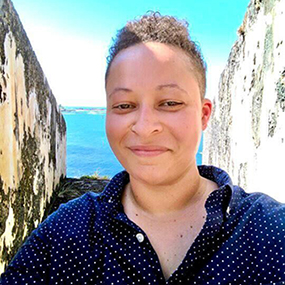
Jonese Franklin
Content Director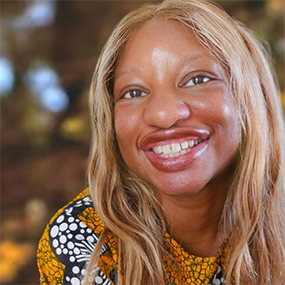
Jazzi Johnson
Managing Producer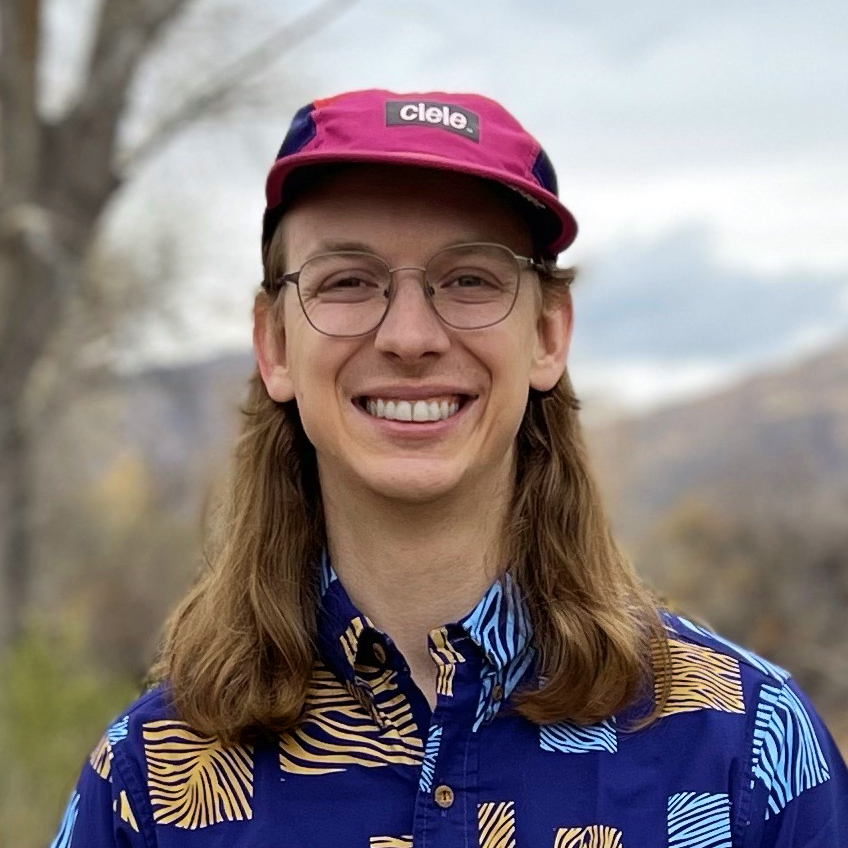
Mark Bramhill
Senior Producer
Josh Fisher
Producer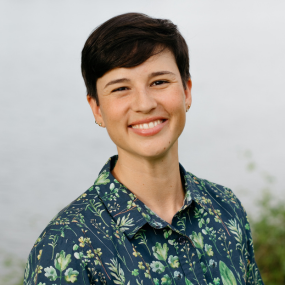
Ariana Remmel
Fact Checker
Anika Hazra
HostBlue Dot Sessions
Music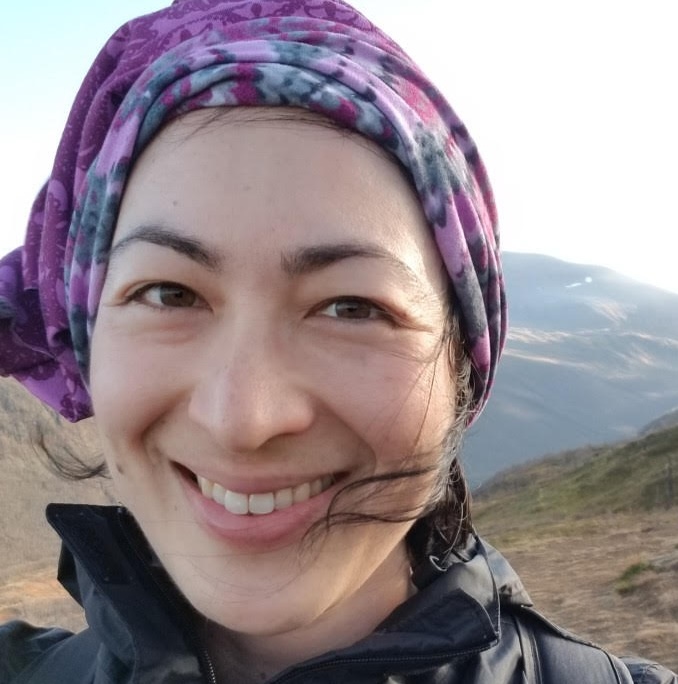
Dr. Abramoff (any pronouns) is an Assistant Professor in the School of Forest Resources at the University of Maine and an activist, speaking on her own behalf. She is interested in how climate change and human land use has altered the biogeochemistry and ecology of forests, particularly belowground components like plant roots and soils. As an activist, she has worked on a variety of environmental and justice issues with groups like Scientist Rebellion and the Climate Emergency Fund.
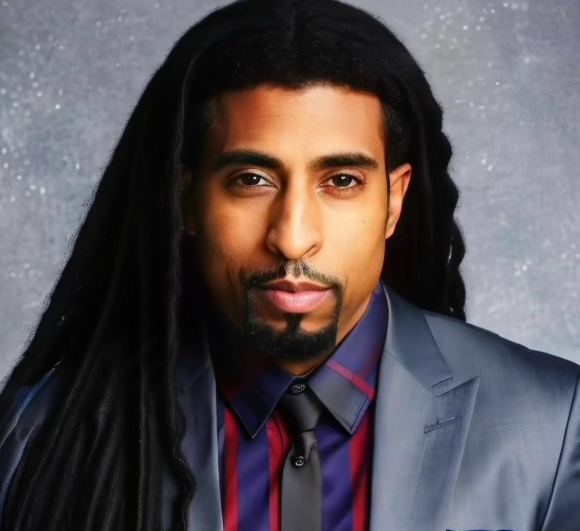
Dr. Mustafa Santiago Ali is the Executive Vice President at the National Wildlife Federation (NWF) and the Founder and CEO of Revitalization Strategies. He is a prominent advocate for public health, environmental justice, and climate change, with over 30 years of experience at the intersection of policy, community engagement, and sustainability.
His career began at the Environmental Protection Agency (EPA), where he was a founding member of the Office of Environmental Justice.
Dr. Ali has worked with over 1,000 communities around the world to tackle environmental, health, and economic disparities. In 2019, he co-designed and moderated the first Presidential Forum on Environmental Justice. In 2020, he launched the Clean Economy of Color Coalition (CECC) to empower entrepreneurs and communities to take advantage of opportunities arising from federal initiatives such as the Bipartisan Infrastructure Deal and the Inflation Reduction Act.
Dr. Ali is a prominent figure in the media, having made appearances on major networks such as ABC, NBC, CBS, MSNBC, CNN, Roland Martin Unfiltered, and Democracy Now! He has been featured in over 300 publications and is an award-winning writer and poet. Mustafa serves on multiple boards, including the Environmental Film Festival, Netflix, the Green Sports Foundation, the Weather Channel, the Union of Concerned Scientists, and the NAACP Image Awards.