
Image: The Ultimate Bird Drawing Throwdown Showdown Graphic featuring images of David Sibley and H. Jon Benjamin

Join BirdNote tomorrow, November 30th!

Illustrator David Sibley and actor H. Jon Benjamin will face off in the bird illustration battle of the century during BirdNote's Year-end Celebration and Auction!
RESERVE YOUR SPOT

Shows With Contributions by Ariana Remmel

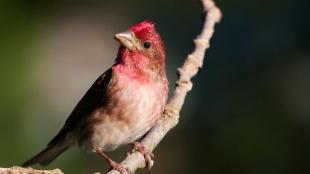
A male Purple Finch facing forward, looking up to his right, in sunlight

An Ever-Growing Library of Bird Sounds

Most of the bird sounds you hear on BirdNote come from the Macaulay Library, a vast collection of over one million bird calls and songs curated by the Cornell Lab of Ornithology. The library relies on both professional field recordists and dedicated volunteers to capture the sounds of…
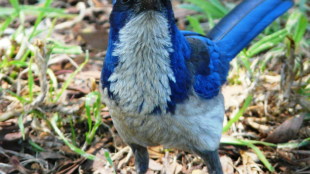
A close-up view of an Island Scrub-jay seen head on. The bird has a white breast and belly, a black mask, and blue body.

How Jays Helped Restore an Oak Forest

Corvids, like crows and jays, are known for caching seeds instead of eating them immediately. Sometimes, those seeds take root before the birds return. Mario Pesendorfer, a forest and behavioral ecologist at BOKU in Vienna, says that’s what happened on Santa Cruz Island in southern…
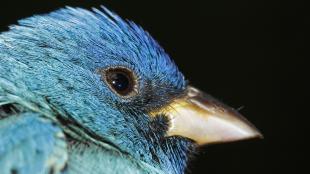
Una vista de cerca de la cara de un colorín azul

Azulillo índigo, navegante de las estrellas

Las estrellas parecen girar en el cielo, lo que plantea una gran pregunta: ¿cómo logran las aves usarlas para orientarse durante la migración? El ornitólogo Stephen Emlen llevó azulillos índigo ( Passerina cyanea), también llamados colorines azules, a un planetario y observó sus…
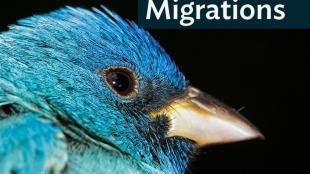
Closeup of Indigo Bunting's head, showing brilliant blue feathers, dark eye and short pointed back

Migrations: Indigo Bunting, Master Stargazer

The stars appear to rotate in the sky, raising the question of how birds can use stars to navigate during migration. Ornithologist Stephen Emlen brought Indigo Buntings to a planetarium, tracking their movements as the simulated night sky changed above them. The buntings oriented…
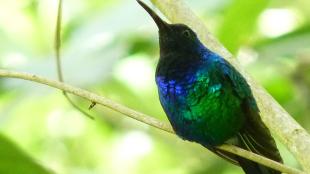
A black hummingbird with iridescent blue throat and green breast

A Lost Hummingbird is Found Again

The Santa Marta Sabrewing is a hummingbird species so rare, they’ve only been documented twice in recent years. Native to the mountains of Colombia, they were officially described in 1946. No one reported another sighting until 2010. They became a “lost” species, eluding every attempt to…
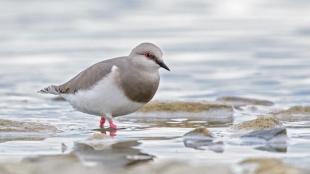
A dapper gray and white shorebird stepping through shallow water. The bird has a short sharp black bill, red eye, and pink legs.

The Delightfully Odd Magellanic Plover

The Magellanic Plover is known for being a bit of an oddball. These shorebirds have a round body like a dove and even feed their young with milk produced in a part of their digestive system called the crop — a rare trait they share with doves. But genetic data revealed that Magellanic…
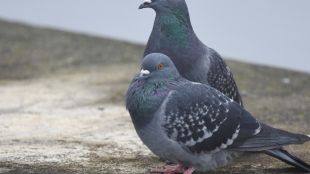
Two feral rock pigeons sit close together on a concrete surface

Bird Books with BirdNote

For many of us nature nerds, books and birds go hand in hand. That’s why BirdNote brings you conversations with award-winning writers about how birds inspire their work. This week, we are asking you to support the show so that we can keep providing daily stories about birds – and the books…
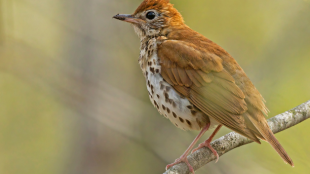
A Wood Thrush perches on a branch in profile, in soft sunlight

BirdNote Helps You Get to Know Your Neighborhood

Whether you know your neighborhood inside-out or you just moved and are getting to know the area, BirdNote adds another dimension to how you understand the place you live — by understanding the birds. Our hope is that by spreading knowledge about birds, BirdNote is helping you become more…
The Bring Birds Back logo featuring guest, Dr. J. Drew Lanham and interviewer, Billy Almon.

Radical Joy with Dr. J. Drew Lanham

Ornithologist, poet and MacArthur Fellow, Dr. J. Drew Lanham, speaks with host Billy Almon in our season 7 finale! The two begin by talking about Drew’s humble beginnings and southern influence from his grandmother’s teachings, and how he became a self-taught birder. Later, they discuss…
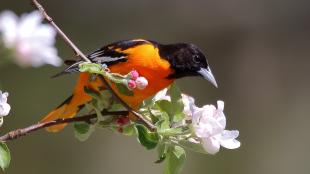
Una calandria o oriole de baltimore anaranjada y negra posada en una ramita en flor.

¿Qué fue primero, la migración al norte o al sur?

Cada año, cientos de especies de aves migran entre América del Norte y del Sur. Algunas especies probablemente evolucionaron a partir de ancestros que se desplazaron hacia el norte en busca de nuevos hábitats de reproducción: la hipótesis del "hogar en el sur". Pero otras pueden haber…