
Image: The Ultimate Bird Drawing Throwdown Showdown Graphic featuring images of David Sibley and H. Jon Benjamin

Join BirdNote tomorrow, November 30th!

Illustrator David Sibley and actor H. Jon Benjamin will face off in the bird illustration battle of the century during BirdNote's Year-end Celebration and Auction!
RESERVE YOUR SPOT

Shows With Contributions by Conor Gearin

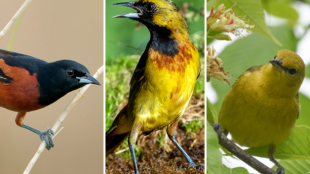
Three images of three Orchard Orioles

Orchard Orioles Band Together

Orchard orioles are social birds that build their nests in large trees among streambanks and wetlands. The males have chestnut-colored breasts and black backs and wings, while females and immature birds are mostly yellow. After the males fly south in late July and early August, the young…
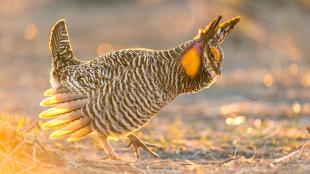
A male Greater Prairie Chicken in courtship display, one foot raised and his feathers softly backlit by sunlight

How to Be a Better Wildlife Photographer

Conservation photographer Noppadol Paothong says that if you go out to take pictures of birds, you shouldn’t just aim to take an eye-catching photo. He spends long hours in photo blinds, often watching and studying birds rather than photographing them. He has become deeply familiar with…
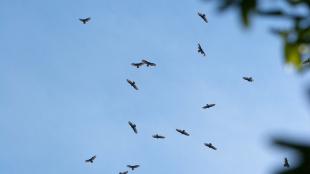
Dozens of Turkey Vultures soaring together in a blue sky

A Kettle of Vultures

In the daytime, hot air rises as the sun heats the ground. The rising column of air is called a thermal, and it’s the perfect way for a Turkey Vulture to hitch a ride. Like an elevator to the skies, the thermal gently wafts the vultures upward. They move in a slowly ascending spiral around…
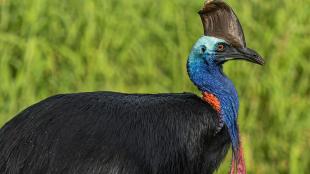
A large flightless bird displays glossy black plumage, bright blue neck and head, with large helmet or "casque" formed of bone atop its head

Raising the World’s Deadliest Bird

You might think the first bird species that humans raised in captivity would be a relatively small one, like a chicken. But evidence suggests that people in New Guinea reared the cassowary, often called the world’s deadliest bird, as much as 18,000 years ago, long before the domestication…
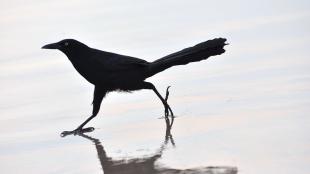
A slender black bird with very long tail strides across wet sand

Great-tailed Grackle

Great-tailed Grackles live up to their name. The glossy black males trail their long, V-shaped tails behind them as they fly, almost like a plane towing a banner ad. And while not quite as flashy, the brown-feathered females have impressively long tails, too. Also known as the Mexican…
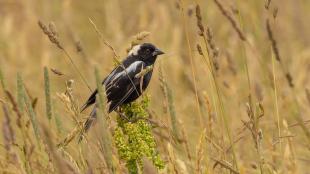
A male Bobolink bird perches on plants in a golden grassy field

What’s a Field of Grass to a Bird?

Although a field of grass might not seem like valuable habitat at first, many birds have adapted to nest in grassland habitats and nowhere else. In North America, birds such as the Bobolink seek out grasslands to raise their young, deftly hiding their nests within the dense vegetation…
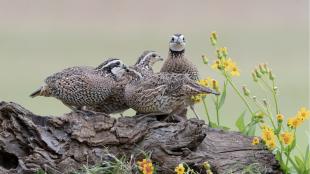
Two pair of Northern BobWhites showing their speckled plumage and striped heads while perched on fallen wood amidst spring flowers

From Bobwhite Coveys to Pairs

Throughout winter, Northern Bobwhites gather in groups called coveys to search for food during the day and share warmth at night. These small quail arrange themselves in a circle, with their tails in the center and heads outward, huddled up like a wreath of plump birds to survive frost and…
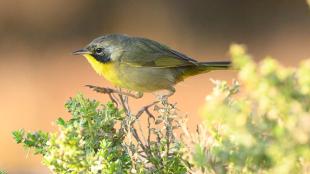
A small songbird with bright yellow throat and black cheek steps across the top of a flowering plant

Common Yellowthroat

Common Yellowthroats are one of the most abundant warblers in North America. They’re adaptable birds, thriving in places that pickier warblers pass over. So it’s easy to find yellowthroats in urban areas. Check for them in marshes, overgrown fields, and brushy areas along streams or trails…
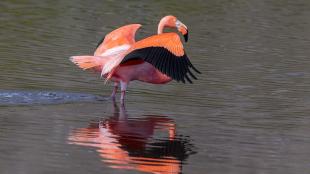
A bright pink-orange flamingo stands in water with wings outstretched, showing the black feathers along their edges

Melanin Makes Feathers Stronger

Many species have black feathers on the trailing edge of their wings, regardless of what color most of their feathers are. Birds as different as gulls, pelicans, storks, and flamingos all have black-tipped wings. These flight feathers are rich in a pigment called melanin. But melanin doesn…
A clear view of the full moon in a black sky

Black Swifts Reach for the Moon

Tracking devices revealed that Black Swifts spent over 99% of their time in the air during the winter, almost never touching the ground for months. What’s more, the swifts flew to incredible heights, reaching the highest altitudes on nights when the moon was full – sometimes over 13,000…