
Image: The Ultimate Bird Drawing Throwdown Showdown Graphic featuring images of David Sibley and H. Jon Benjamin

Join BirdNote tomorrow, November 30th!

Illustrator David Sibley and actor H. Jon Benjamin will face off in the bird illustration battle of the century during BirdNote's Year-end Celebration and Auction!
RESERVE YOUR SPOT

Shows With Contributions by Mick Thompson

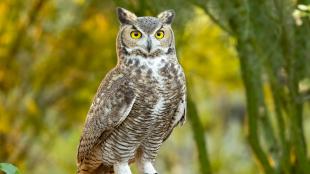
A Great-Horned Owl stands facing the viewer, showing its bright yellow eyes, and the tufted feathers ("plumicorns") atop its head.

Great Horned Owls in the Neighborhood

Not all owls live in the deep woods. Many Great Horned Owls make their homes in urban areas. Though mostly nocturnal, Great Horned Owls are also active early in the morning and just after sunset, offering a chance to see them hunting for rodents and other prey. Look for their distinctive…
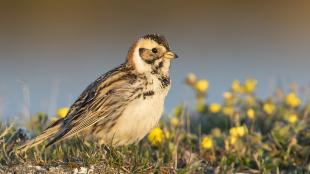
A male Lapland Longspur bird in sunlight on the tundra

Spring Birdsong in the Arctic

Spring has reached the Arctic. Low-growing wildflowers carpet slopes of tundra, and arriving migratory birds begin to sing: Lapland Longspurs, Hoary Redpolls, Snow Buntings, Bluethroats, and more.
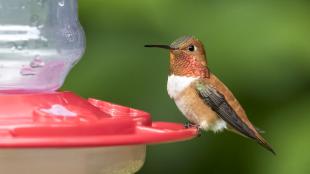
A male Rufous Hummingbird with buff-color breast and reddish orange throat is perched at a nectar feeder

Thirsty Rufous Hummingbird

Hummingbirds need to consume five times their body weight each day. This Rufous Hummingbird of the West is looking for flowering plants to quench that mighty thirst on its spring migration. A feeder would work, too. Put a hummingbird feeder up in your yard, and see who turns up!
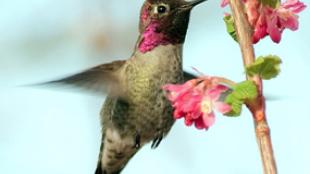
Anna's Hummingbird drinking from flower

A Natural Feast for Hummingbirds

Hoping to attract hummingbirds to your yard or balcony? One way is to grow native plants. Native plants provide cover, and they offer nectar in spring and summer. They also attract insects, the most important part of a hummingbird’s diet. Just add a source of water for drinking and bathing…
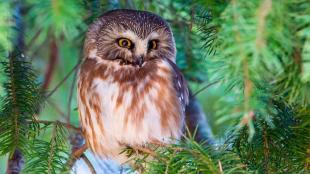
Tiny Northern Saw-whet Owl facing forward perched in evergreen branches

Northern Saw-whet Owl - A Bird with a Lot to Say

For such a small owl, the Northern Saw-whet has a lot to say. And a lot of ways to say it. Males weigh about as much as an American Robin. And they send out at least 11 different calls, including “toot-toot-toot” advertising calls, from late January through May. The rate of calling is…
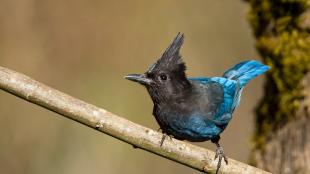
A Steller's Jay faces the viewer, showing bright blue while gripping a branch

Dave Mull and the Courage of Steller’s Jays

Skateboarder and birder Dave Mull remembers the first time he heard a Steller’s Jay imitating a Red-tailed Hawk. “These Steller's Jays were pretending to be something they were not, kind of tricking the world,” he says. It got him into the mindset that he could attempt a terrifying new…
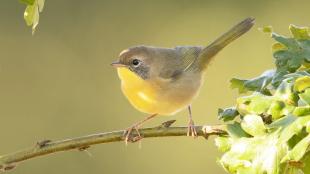
A small bird with lemon yellow breast and light brown back is perched on a branch in partial sunlight

The Feminist Bird Club

The Feminist Bird Club, or FBC for short, is a birding group that’s intentional about making sure people from all backgrounds feel welcome, says FBC board member Jeana Fucello. At this group’s events, birding and social justice go hand-in-hand, says Kasia Chmielinski, the co-founder of the…
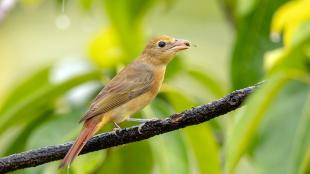
A Summer Tanager with a wasp in its beak, and perched on a branch amidst green leaves

Summer Tanagers: Wasp Hunters

Summer Tanagers snatch bees and wasps in mid-air, as they buzz about. Bug in beak, the bird flies to a perch, slams the insect against a branch until it’s dead, then wipes it against the branch to remove the stinger before eating it. Summer Tanagers will also tear open paper-like wasp…
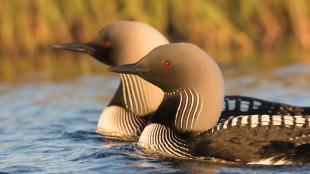
A Pair of Pacific Loons swim close together in a calm lake

Music of a Tundra Lake

Many of the waterbirds that winter along the coasts of the Lower 48 spend their summers breeding on tundra ponds and lakes. Loons, grebes, scoters and others call throughout the long summer days. Together, their voices create a symphony that evokes the Arctic north.
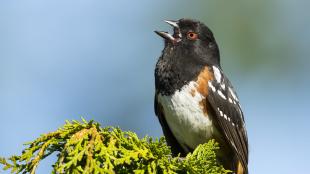
Male Spotted Towhee singing in sunlight, with his black head, throat and wing set off by his white breast and red eye.

Rachel Carson and Silent Spring

Among the most welcome features of spring is the renewal of bird song. Can you imagine a spring without the voices of birds? The silence would -- as they say -- be deafening, the absence of their songs like the loss of one of our primary senses. Rachel Carson's 1962 book, Silent Spring…