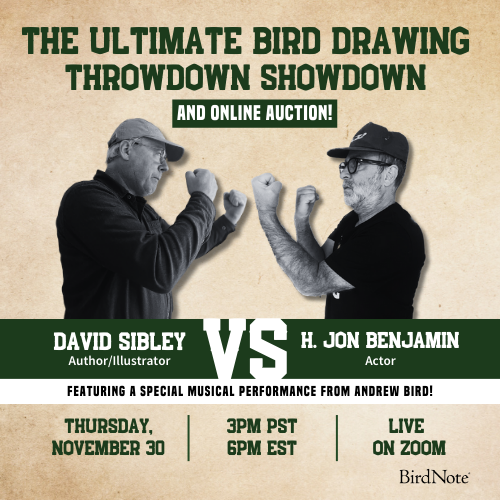
Image: The Ultimate Bird Drawing Throwdown Showdown Graphic featuring images of David Sibley and H. Jon Benjamin

Join BirdNote tomorrow, November 30th!

Illustrator David Sibley and actor H. Jon Benjamin will face off in the bird illustration battle of the century during BirdNote's Year-end Celebration and Auction!
RESERVE YOUR SPOT

Shows With Contributions by Mary McCann

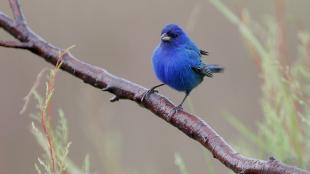
Indigo Bunting showing its vivid blue plumage, pale wide beak and dark legs as it stands on a wet branch.

Indigo Bunting – Bird of the Ecotone

Many birds – like this Indigo Bunting – can be found in ecotones, the borders between two habitats. Indigo Buntings breed in the ecotone between forest and meadow. They are common at Muscatatuck National Wildlife Refuge in Indiana, where grassland and forest are interspersed to produce…
Chuck-will's-widow

Night Voices – Nightjars

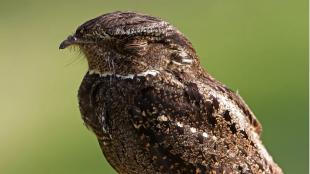
As darkness descends on a May evening, the voices of many birds go quiet. But for some birds, especially those known as nightjars, the music is just beginning! An Eastern Whip-poor-will shouts out its name. The call of a Common Poorwill echoes across a canyon. A Common Pauraque calls from…
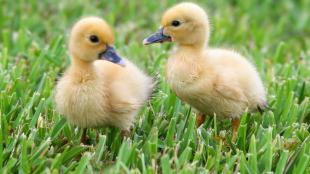
Two Muscovy ducklings standing on grass, their soft fuzzy yellow bodies and dark eyes and beaks seen in overcast light.

From Egg-laying to Hatching and Beyond

Waterfowl like this Muscovy duckling spend up to 30 days in the egg, so they’re able to walk, swim, and feed themselves as soon as they hatch. We call these chicks precocial. By contrast, the chicks of most songbirds spend less time maturing in the egg. They must continue to develop in the…
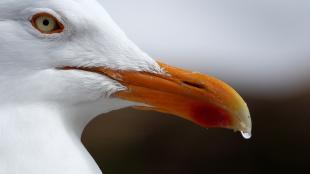
Herring Gull

Seabirds Drink Salt Water

Seabirds have no problem drinking sea water. The salt they take in is absorbed and moves through their blood stream into a pair of salt glands above their eyes. The densely salty fluid is excreted from the nostrils and runs down grooves in the bill. As the drop gets larger, the bird shakes…
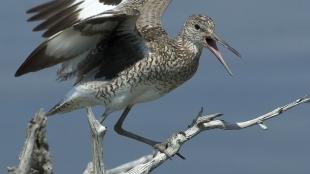
Willet perched on a branch and calling

The Noisy Willet

Unlike many shorebirds, Willets breed inland. When nesting is done, they migrate south to both Atlantic and Pacific coastlines in the U.S. and Central and South America. What they all have in common, wherever they have bred and wherever they spend the winters, is an unmistakable voice…
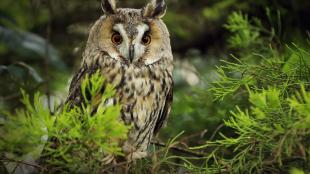
Long-eared Owl perched in tree

Long-eared Owls Fly at Night

Nocturnal Long-eared Owls tuck up in dense stands of trees across North America and temperate Europe and Asia. They may form communal roosts up to a hundred in number in the winter. After dark, their low-pitched hoots carry for half a mile, as they cruise low over fields, listening…
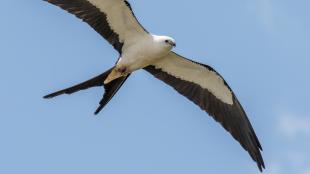
Swallow-tailed Kite

Swallow-tailed Kite

A bird of prey in the American Southeast takes grace to an utterly new level. It's the Swallow-tailed Kite. A sleek raptor with a deeply forked tail, the Swallow-tailed Kite almost never flaps its wings. The bird makes sudden tight turns, upside-down moves, and quick backward dives, all by…
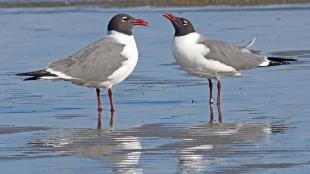
A pair of Laughing Gulls facing each other while standing on shoreline

Gulls or 'Seagulls'?

Gulls seem so much a part of the sea that we often just call them "seagulls," a colloquial title for these graceful, ubiquitous creatures. Twenty-two species breed in North America. The Pacific coast is home to the aptly named Western Gulls. The familiar Ring-billed Gull nests all across…
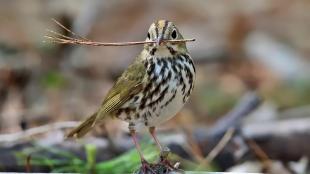
An Ovenbird holding a twig or pine needle in his beak, his body in 3/4 profile with his head turned to the right. The Ovenbird's wings and back are soft greenish brown, his chest white with patchy vertical dark brown stripes. Atop his head, a golden streak is flanked by two brown stripes.

Spring Birds Arrive in the Eastern Forest

May in an Eastern hardwood forest, and the chorus of spring birdsong is nearing its peak. The Carolina Wren, a year-round resident, has been singing since the end of winter. The resounding notes of this Ovenbird let us know it has returned safely from Belize, after a long flight across the…
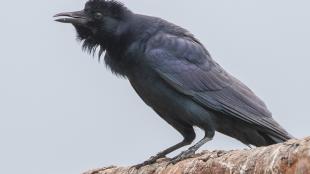
Tamaulipas Crow

Unlikely Places to Go Birding

Birding is often best in the least likely places. At sewage treatment plants, watch for ducks and gulls – and raptors keeping watch over them all. Another place might be your local landfill or dump. The Brownsville, Texas dump was, for years, the only place in the U.S. you could find this…