
Image: The Ultimate Bird Drawing Throwdown Showdown Graphic featuring images of David Sibley and H. Jon Benjamin

Join BirdNote tomorrow, November 30th!

Illustrator David Sibley and actor H. Jon Benjamin will face off in the bird illustration battle of the century during BirdNote's Year-end Celebration and Auction!
RESERVE YOUR SPOT

Shows With Contributions by Frances Wood

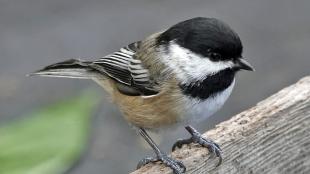
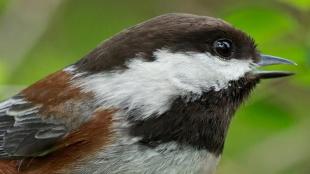
Chestnut-backed Chickadee calling

Comparing Chickadee Calls

In the Pacific Northwest, you might see both Black-capped and Chestnut-backed Chickadees at your birdfeeder. The Chestnut-back (seen here) sounds different from the Black-capped Chickadee. The call of the Black-capped follows the familiar “Chick-a-dee, dee, dee” pattern. But the call of…
Marsh Wren

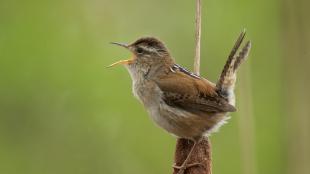
The Marsh Wren

Some bird-lovers have tagged the Marsh Wren the "Heinz 57 variety" bird, because scientists have recorded 57 different variations of its song. And nightfall doesn't faze these birds. A male may sing straight through the night. Marsh Wrens usually forage out of view, hopping up only for…
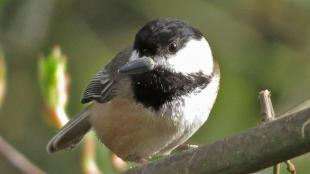
Black-capped Chickadee

Black-capped Chickadee

If you hang a simple feeder outside your window, you might attract this Black-capped Chickadee and many other birds. Fill the feeder and install it close to any room where you spend time. Hang the feeder within three feet of the window to keep the birds from colliding with the glass. That…
Black-capped Chickadee with seed

Old and New Memories of Black-capped Chickadees

Fernando Nottebohm of Rockefeller University studies the growth of neurons in the brains of birds. He’s an expert in the remarkable ability of Black-capped Chickadees to recall the locations of hundreds of stored seeds. Dr. Nottebohm suggests that as demand for memory space peaks…
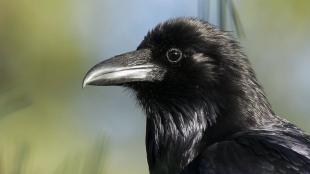
Common Raven viewing her world

How Raven Made the Tide

Long ago the tide stayed close to shore. The people went hungry because the clams lay hidden under water. Then Raven had a plan. He put on his cloak and flew along the shore to the house of the old woman who held the tide-line firmly in her hand. Raven fooled her, and she let go of the…
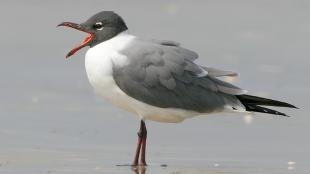
Laughing Gull

The Gulls of Summer

Gull-watching is pretty tame along the coasts most of the summer. Many gull species retreat north to nest; a few others nest inland. Along the Atlantic, it’s mostly nesting Herring and Laughing Gulls (like this one) that stick around through summer. On the Pacific Coast, it’s Glaucous…
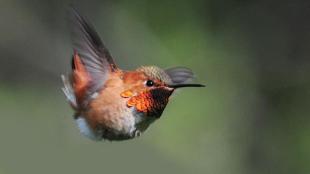
Rufous Hummingbird hovering

Rufous Hummingbirds Head South

Right now in the Northwest, male Rufous Hummingbirds are heading south. By late July, they will pour into southeastern Arizona on their way to wintering areas in Mexico. The females and their offspring will leave later in the summer, some lingering until mid-September. Along the way, they…
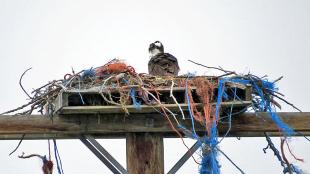
Osprey nest on power pole

Nests with Flair

While small birds gather feathers and fuzz, an Osprey adds material to its showy nest, high on a tree with a broken top - or maybe on a tower. Take branches three feet long; add sticks, bark, and mats of algae; throw in some flotsam and jetsam, and you have an Osprey's nest. It's…
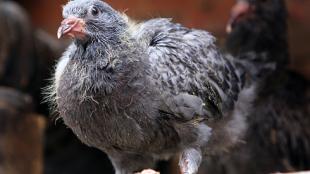
Juvenile Rock Pigeon

Pigeon Babies Do Exist

Rock Pigeons are one of the most common urban birds. But why do we never see baby pigeons? Some baby birds - like down-covered ducks, geese, and chickens - leave their nest shortly after hatching and do a lot of growing up while following their parents around. Others, like pigeons, depend…
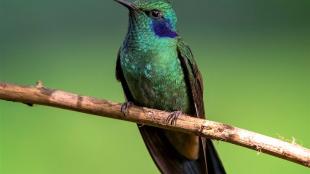
Green Violet-ear Hummingbird

Ecotourism

Hiring a local guide when you visit an exotic destination can be a win-win-win situation. You receive the services of a local expert - and you might get to see this Green Violet-ear Hummingbird (now known as a Mexican Violet-ear or Lesser Violet-ear). The guide has employment. And the…