
Join BirdNote tomorrow, November 30th!
Illustrator David Sibley and actor H. Jon Benjamin will face off in the bird illustration battle of the century during BirdNote's Year-end Celebration and Auction!
As the Crowe Flies
Alice T. Crowe finds connections between crows and racism in American history.

Crows play many roles in human cultures, from ominous tricksters to sacred purveyors of wisdom. After exploring the stories behind her family surname, attorney and playwright Alice T. Crowe discovered a deep historical connection between the racist symbology of Jim Crow and the negative image of these birds in many Western cultures. Despite the social stigma surrounding crows, Alice says we can learn important lessons from how they treat each other.
BirdNote®
As the Crowe Flies
Written by Adé Ben-Salahuddin
This is BirdNote.
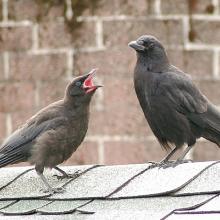
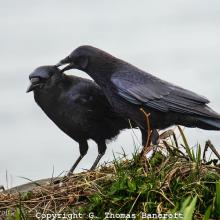
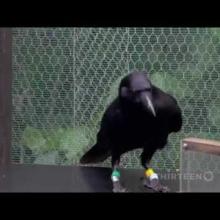
[American Crow]
Crows play many roles in human cultures, from ominous tricksters to sacred purveyors of wisdom. But for much of American history, the social stigma around crows leant itself to a more pejorative meaning, says attorney and playwright Alice T. Crowe:
Alice T. Crowe: The crow is a very beautiful creature, very knowledgeable, very intelligent; but in the context of the system of racism, the crow is black, is ugly, is something to be feared and so the word “crow” was used to describe color. We were called crows, and the image of the crow — lynched upside down — was used to intimidate us.
When Alice began exploring her family’s history with the Crowe surname, she discovered a deep historical connection between the racist symbology of Jim Crow and the negative image of these birds in many Western cultures — a particular irony given Black peoples’ history with crows pre-enslavement.
Alice T. Crowe: Crow, in Africa, is a bird that was sacred. We learned from the crow; the crow is part of our culture. Even the remnants of culture that people think we didn’t hold onto from the African experience, we have.
For example, in some West African societies, crows symbolize wisdom and leadership, and their movements inspired dances. While they were later appropriated and mocked by the Jim Crow caricature, Alice doesn’t let this taint her outlook on the bird.
Alice T. Crowe: Crows look at each other and they look at themselves and they see beauty. They don’t see ugly. They don’t see something to be mocked. They don’t always get along but for the most part they look out for each other, they mourn the death of each other, they defend each other, so when they look at each other they see themselves and they love themselves, and I think that’s something that we can learn from their behavior.
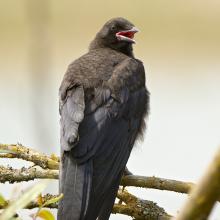
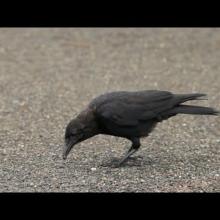
[American Crow]
To learn more about Alice and her documentary project, Our Name is Crowe, go to our website BirdNote.org. I’m Adé Ben-Salahuddin.
###
Senior Producer: Mark Bramhill
Producer: Sam Johnson
Managing Editor: Jazzi Johnson
Managing Producer: Ariana Remmel
Content Director: Jonese Franklin
Bird sounds provided by The Macaulay Library of Natural Sounds at the Cornell Lab of Ornithology, Ithaca, New York. American Crow ML229089 recorded by Bob McGuire.
BirdNote’s theme was composed and played by Nancy Rumbel and John Kessler.
© 2025 BirdNote June 2025
Narrator: Adé Ben-Salahuddin
ID# CroweA-01-2025-06-19 CroweA-01

Adé Ben-Salahuddin
Writer NarratorSights & Sounds